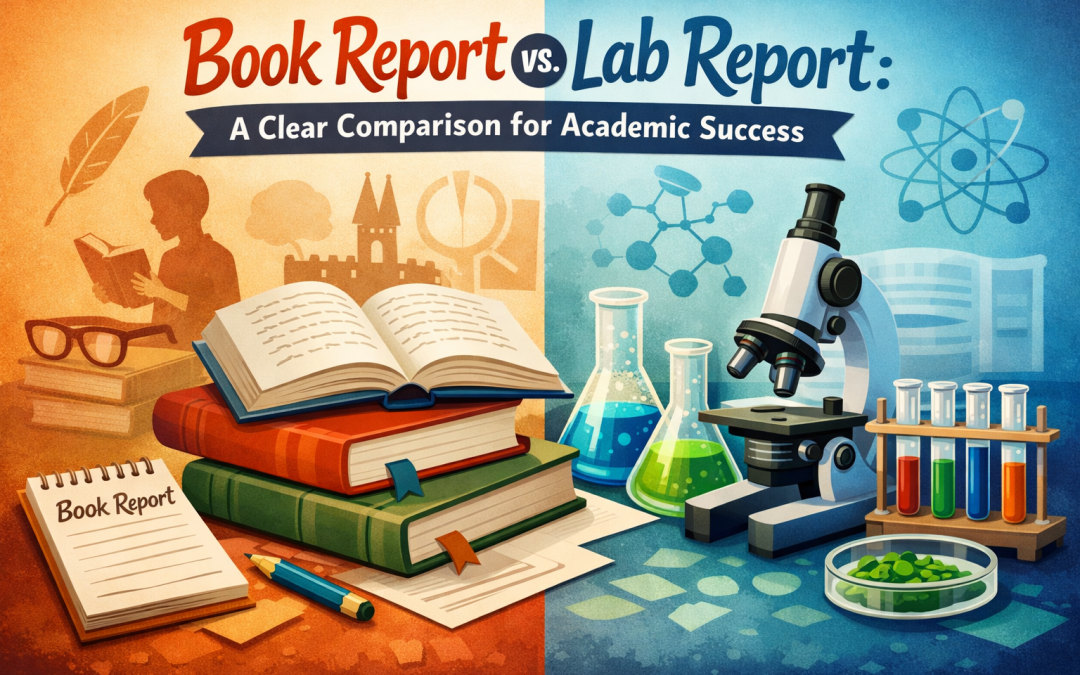
Academic writing includes different assignment styles, each designed to test specific skills. Among the most common are book reports and lab reports. Although both require organized writing, their goals and methods are not the same. Many students lose marks because they fail to recognize book report vs lab report expectations and apply the wrong approach. Understanding how each format works helps students write with clarity and confidence.
This article explains the difference between book and lab report in purpose, structure, and tone. It also presents a practical comparison of book and lab report so learners can meet academic standards and improve overall performance.
Purpose and Learning Objectives
A book report is written to analyze and interpret a text. It measures how well a student understands themes, arguments, and ideas. A lab report, in contrast, documents scientific procedures, observations, and results in a factual way. This core distinction defines book report vs lab report at the academic level.
The difference between book and lab report is also visible in learning objectives. Book reports develop critical reading and personal interpretation, while lab reports develop scientific reasoning and evidence-based thinking. When students understand this contrast, they can prepare more effectively for each assignment.
Through a clear comparison of book and lab report, it becomes obvious that one focuses on insight and reflection, while the other focuses on accuracy and documentation. Recognizing this prevents students from mixing writing styles. Custom book report writing services help students produce well-structured, insightful reports that meet academic requirements and save valuable study time.
Structure and Format
Book reports follow a flexible structure that usually includes an introduction, summary, analysis, and conclusion. This allows room for discussion and interpretation. Lab reports follow a fixed scientific layout that includes sections such as introduction, method, results, and discussion. This formal structure reinforces book report vs lab report differences in organization.
Another difference between book and lab report lies in how evidence is presented. Book reports rely on references and quotations from the text. Lab reports rely on numerical data, tables, and experimental findings. Using the wrong form of evidence weakens academic credibility. Some students search for pay someone to write my lab report when they actually need expert guidance, editing support, and feedback to improve their own scientific writing skills.
Writing Style and Tone
Tone separates these assignments even further. Book reports allow personal opinions and interpretive language, as long as arguments are supported by the text. Lab reports demand objective, formal, and precise language that avoids personal bias. This stylistic contrast defines book report vs lab report writing expectations.
The difference between book and lab report is also seen in vocabulary choice. Book reports may use descriptive phrasing to explore ideas. Lab reports require technical terms and concise explanations. Students must learn to switch between expressive and scientific writing styles.
A thoughtful comparison of book and lab report highlights the importance of adapting tone based on assignment type. This flexibility strengthens academic communication skills across subjects.
Skills Developed and Assessment Criteria
Book reports help students develop reading comprehension, argument-building, and interpretive thinking. Lab reports help students develop data analysis, logical reasoning, and technical documentation. These outcomes further distinguish book report vs lab report as separate academic tools.
The difference between book and lab report also appears in grading criteria. Book reports are assessed on depth of understanding and clarity of interpretation. Lab reports are assessed on experimental accuracy and logical conclusions. Knowing these criteria helps students focus their preparation.
Common Mistakes and Final Thoughts
Students often make the mistake of using personal opinions in lab reports or overly technical language in book reports. These errors occur when learners misunderstand book report vs lab report expectations. Recognizing assignment requirements early prevents confusion.
Another difference between book and lab report lies in preparation. Book reports require careful reading and note-taking. Lab reports require accurate observation and record-keeping. Adjusting study methods for each task improves performance.
A complete comparison of book and lab report reveals that both formats play essential roles in academic development. One sharpens interpretation skills, while the other strengthens scientific discipline. Learning to handle both effectively ensures academic success across fields
Conclusion
Understanding different academic writing formats is an essential part of student success. When learners recognize the purpose, structure, and tone required for each type of assignment, they write with greater clarity and confidence. Adapting to these expectations not only improves grades but also builds valuable communication and analytical skills. With practice, guidance, and the right approach, students can handle any academic report effectively and prepare themselves for future academic and professional challenges.


Secure Order

Academic Assistance