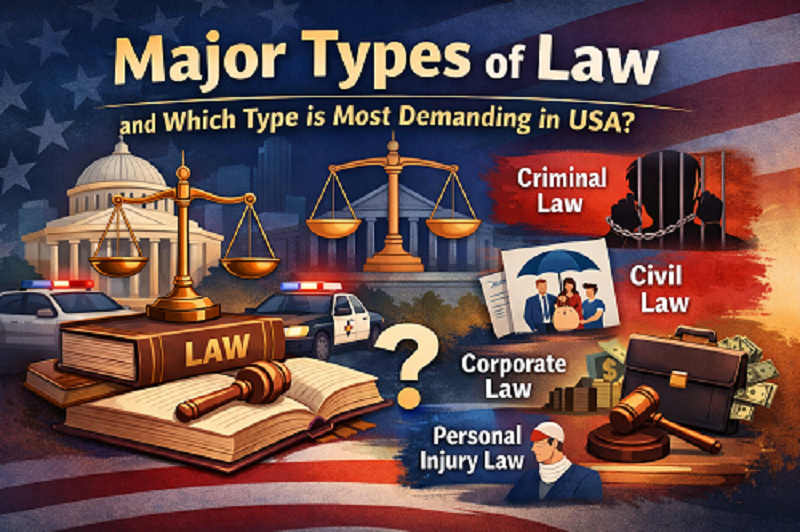
The legal profession is vast, encompassing a variety of specialties and fields that cater to different interests and skills. For law students and aspiring attorneys, understanding the major types of law is crucial for making informed career decisions. Each branch offers unique challenges and rewards, and the choice of specialization can significantly influence career trajectory and job satisfaction.
Understanding the Major Types of Law
Law is not a single monolithic entity; it is a structured system with numerous categories. Some of the major types of law include criminal law, civil law, corporate law, environmental law, family law, intellectual property law, and constitutional law. Criminal law focuses on offenses against the state and public safety, while civil law deals with disputes between individuals or organizations. Corporate law governs business operations and commercial transactions, whereas intellectual property law protects creative works, patents, and trademarks. Family law addresses matters like divorce, child custody, and adoption, and constitutional law involves the interpretation and application of the U.S. Constitution.
Factors That Make a Law Type Demanding
Not every discipline of law is demanding. Some require intensive study, rigorous analytical skills, or constant adaptation to evolving legal frameworks. The most challenging form of law in USA is usually the high-stakes litigation, complicated regulatory adherence or rapidly changing legislature. An example is corporate law, which is known to be challenging because of the complexity of mergers and acquisitions, contracting and securities laws. The intellectual property law is also difficult but rewarding since it involves attention to finer details and knowledge of technological advancements.
The law that is the most demanding type of law in USA may also be subject to geographical location, economic policies, and industry dynamics. As an illustration, states where a financial sector is prominent might have a high demand of corporate lawyers, and a region where technological advancement is high may need specialists in intellectual property law. Being aware of these aspects would assist students in strategizing their future lives.
What is the Best Law Type to Use with students
The choice of specialization is a serious matter, and one must take into account individual abilities, career objectives, and the demand in the market. The topic on what type of law is most effective to the students remains a subjective issue yet a few criteria can be used to provide a recommendation. Students are supposed to analyze their strengths in analytical reasoning, negotiation, research, and advocacy. They must also look at the areas that they are interested in and passionate about because long-term success in law requires long-term motivation.
The decision on which law type is best for students must be made with a balance between the personal satisfaction and the practicality of the choice (employment opportunities and income potential). For law students tackling complex topics, professional paper writers can provide guidance to produce well-structured and high-quality assignments.
New Trends in Legal Specialization
The United States legal environment is dynamic. The future of the practice areas is outlined by emerging trends that dictate which most demanding type of law in USA will remain the field where growth is possible. Examples include cybersecurity and data privacy law, which have become important issues in the digital era as businesses seek legal advice to ensure they adhere to the rules and regulations as well as safeguard confidential data. In a similar manner, the healthcare law is on the rise because of the regulatory changes and the complexity of the medical industry, which is gradually growing. Those students that match their studies with these emerging areas have a chance to be successful in the long run.
The adoption of technology in law, including legal tech, AI-aided research, and electronic case management, is also having an effect on what types of law majorly need specialized skills. Having knowledge and skills in technology and its legal implications will provide the students with an advantage in the most challenging fields. Individuals who are determining the most appropriate type of law to give the students should consider the dynamic needs of the specialization they are undertaking. Students exploring the major types of law can save time and ensure quality research by using a reliable law assignment writing service.
Striking a Balance between Passion and Practicality
As much as demand and income potential should be put into consideration, students should also take a course that they enjoy doing. The significant kinds of law provide various intellectual and emotional gratification. Criminal law can be appealing to advocacy-minded people interested in serving the community, whereas intellectual property law can appeal to analytical minds interested in innovation. Corporate law offers the chance to think strategically and high-profile transactions, but environmental law fulfills the needs of students who want to make a difference in the world and sustainability.
The balance of personal satisfaction and the realities of the market is a critical point of consideration in determining which law type is best for students. Passion is a driving force behind motivation and resilience that is essential in the legal profession that is very demanding. A combination of passion and business acumen will enable students to succeed in school and in the workplace.
Conclusion
Law is a multifaceted profession with numerous opportunities and challenges. Familiarity with the major types of law enables students to make informed decisions about their specialization. The most demanding type of law in USA often combines high stakes, complexity, and evolving regulations, but offers substantial professional rewards. Determining which law type is best for students depends on individual interests, skills, and career aspirations, alongside market demand. By analyzing trends, seeking mentorship, and understanding personal strengths, students can select a specialization that ensures both professional success and personal satisfaction.
Choosing the right branch of law is a strategic decision that can influence every stage of a legal career. With careful planning and a thorough understanding of the legal landscape, law students can position themselves to excel in the most challenging and rewarding areas of the profession.


Secure Order

Academic Assistance