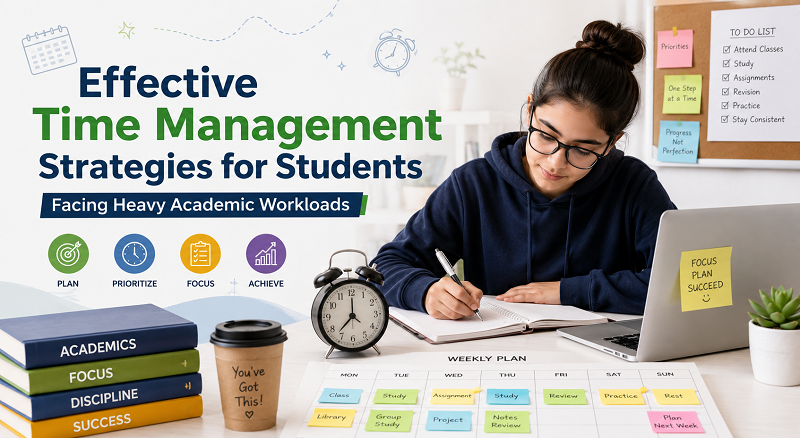
Modern students often juggle multiple responsibilities, including coursework, assignments, exams, internships, and personal commitments. As academic demands continue to increase, managing time effectively has become one of the most important skills for achieving success. Without proper planning, students can quickly feel overwhelmed, leading to stress, missed deadlines, and reduced academic performance. Fortunately, adopting practical time management techniques can help students stay organized, productive, and focused even during the busiest periods of their academic journey.
Why Time Management Matters More Than Ever
Intelligence and talent are not the only factors that ensure academic success. Spending time wisely can be more important than anything to achieve consistent results. The students who schedule their time effectively will be more successful with assignments on time, preparing for tests adequately, and enjoying a balance between studying and life.
New opportunities have arisen for students, as more online learning resources have become available to them, but there are also new distractions that have come into the world. The constant digital distraction of social media, streaming platforms, and more can easily eat away valuable study time. That is why it has become a necessity to develop students’ time management skills in the contemporary learning setting. Many students rely on professional paper writers to receive expert guidance, improve their academic writing skills, and meet important submission deadlines.
Use the Importance-Urgency Method to Priorities Tasks
Some tasks in the academic setting are more important than others. Some assignments are of major importance to a final grade, and others are not. Students should be able to make a difference between the urgent and important things.
One effective approach to manage study time effectively is to divide up tasks into four quadrants: urgent and important, important but not urgent, urgent but not important, and not urgent or important. This serves to direct students’ energies to those activities that offer the most academic benefit.
So, for instance, if you’re studying for a big test that’s next week, then most of the time it’s a good idea to study for that test more than to create notes for a test that’ll be next year. Strategic prioritization gives an organization the opportunity to spend valuable time where it is most needed.
Create a Realistic WEEKLY PLAN
A weekly plan gives an overview of your upcoming responsibilities and deadlines for the week. Students have time allocated for lectures, assignments, revision, and extra-curricular activities and personal commitments.
One of the best study schedule tips for students is to plan study time in front of free time instead of attempting to study in the time that is left after free time. This anticipatory approach helps to make sure that academic priorities are adequately addressed.
Weekly planning also enables pupils to plan for potentially hectic times of the week. An extra space may be scheduled to keep people on track during exam periods or when a big project is coming up.
Discover Time Blocking
Time blocking is a really effective productivity technique ,here you dedicate a particular time to a particular task. Rather than using a general to-do list, students have a set period of time to study specific subjects.
For instance, a pupil could book the time from 9:00 AM to 11:00 AM for math, 1:00 PM to 3:00 PM for research work, and 4:00 PM to 5:00 PM for revision. This systematic way of working would take the strain out of making decisions and introduce a degree of responsibility.
Time blocking can be a helpful tool for students studying how to manage their time effectively, as it helps to establish clear boundaries between various academic tasks and avoid spending a whole day on a single task. Students seeking assistance with assignments often look for custom book report writing services to receive professionally crafted and plagiarism-free reports.
Consider a Work-Life Balance
Time management for students helps them complete assignments, prepare for exams, and reduce academic stress. Always keep physical and mental health in mind and never sacrifice it for productivity. Without sleep, exercise, and relaxation, students can lose focus, have less energy, and increase their stress levels.
Sleep is important for memory consolidation and cognitive functioning. Routine exercise can also enhance concentration, attitude, and school effectiveness.
Time management is healthy when you make time for yourself, for leisure, and for socializing. Balance helps to avoid burnout and long-term academic success.
One effective tip to manage time is for students to understand that rest is not wasted time. Learners’ ability to make strategic breaks and recovery periods has a direct impact on learning outcomes.
Make Technology Your Productivity Partner
Good time management for students allows learners to balance study, personal life, and rest more effectively. The use of technology can either be a facilitator or a barrier to learning success. Students can use productivity apps, digital calendars, and task management tools to help them better organize responsibilities.
Students can use applications like Google Calendar, Notion, Microsoft To Do, and Trello to keep track of deadlines, remind them of deadlines, and keep track of progress. Digital tools can also give you a visual schedule of your activities, which can help you see any potential conflicts and make adjustments accordingly.
One of the most practical study schedule tips for students is to have digital reminders when assignments are due and when they need to study for exams. These are devices that allow pupils to get ahead of key learning tasks.
| Time Management Strategy | How It Helps Students | Example for Academic Work |
| Creating a study routine | Builds consistency and reduces last-minute stress | Studying two hours daily instead of cramming before exams |
| Prioritizing tasks | Helps students focus on urgent and important work first | Completing a major assignment before revising low-priority notes |
| Weekly planning | Gives a clear overview of deadlines and responsibilities | Planning lectures, revision, assignments, and personal time in advance |
| Time blocking | Assigns fixed time slots to specific subjects or tasks | Studying maths from 9 AM to 11 AM and writing assignments from 1 PM to 3 PM |
| Reducing distractions | Improves focus and productivity during study sessions | Turning off phone notifications and using website blockers |
| Using digital tools | Helps track deadlines, reminders, and progress | Using Google Calendar, Notion, Trello, or Microsoft To Do |
| Taking regular breaks | Prevents burnout and improves concentration | Studying for 50 minutes and taking a 10-minute break |
| Reviewing progress weekly | Helps students adjust unrealistic study plans | Checking what was completed and changing next week’s schedule |
| Maintaining work-life balance | Supports mental health and long-term academic success | Making time for sleep, exercise, relaxation, and social activities |
Monitor and Tweak Your Plan Regularly
Time management for students is not a one-size-fits-all process. Pupils should regularly assess what is going well and what needs development. A weekly review will show you productivity trends, common distractions, and possible areas for improvement.
The study plan should be adjusted if it is always an unrealistic plan. It’s important to be flexible since academic requirements can change during a semester.
Students interested in improving their time management should aim to do this on an ongoing basis, not to perfection! Making small changes over the long term can have a significant impact.
Conclusion
Managing heavy academic workloads requires planning, discipline, and adaptability. Students who establish clear goals, prioritize tasks effectively, eliminate distractions, and maintain balanced routines are better equipped to handle academic pressure. Understanding how to manage study time effectively allows learners to maximize productivity without sacrificing well-being. By implementing proven study schedule tips for students and embracing practical organizational strategies, students can confidently navigate demanding academic environments and achieve lasting success.


Secure Order

Academic Assistance